Thursday, June 17, 2010

Summer Camp Participants Empowered through Leadership and Learning


By Quiana Graham
Director, Youth & Family Programs
Indiana Black Expo, Inc.
OPTIONS Class 10 member

Every year March is designated as Women's Empowerment Month. During that month, we see public service announcements honoring great women such as Amelia Earhart, Madame C J Walker, Betsy Ross and other women who have helped to make this country great!

As a person active in the non-profit community, I work first hand with the National Girls Inc. office, which is located in downtown Indianapolis. I have read numerous scholarships of Girls Inc. graduates from throughout the country who seek financial assistance from the organization to continue their educational endeavors. Their essays recount how the organization has helped them to form personal value statements, increased their self-worth and overcome challenges that they have face in life. Each year I am amazed at the courage and strength that these young ladies demonstrate in the face of adversity!
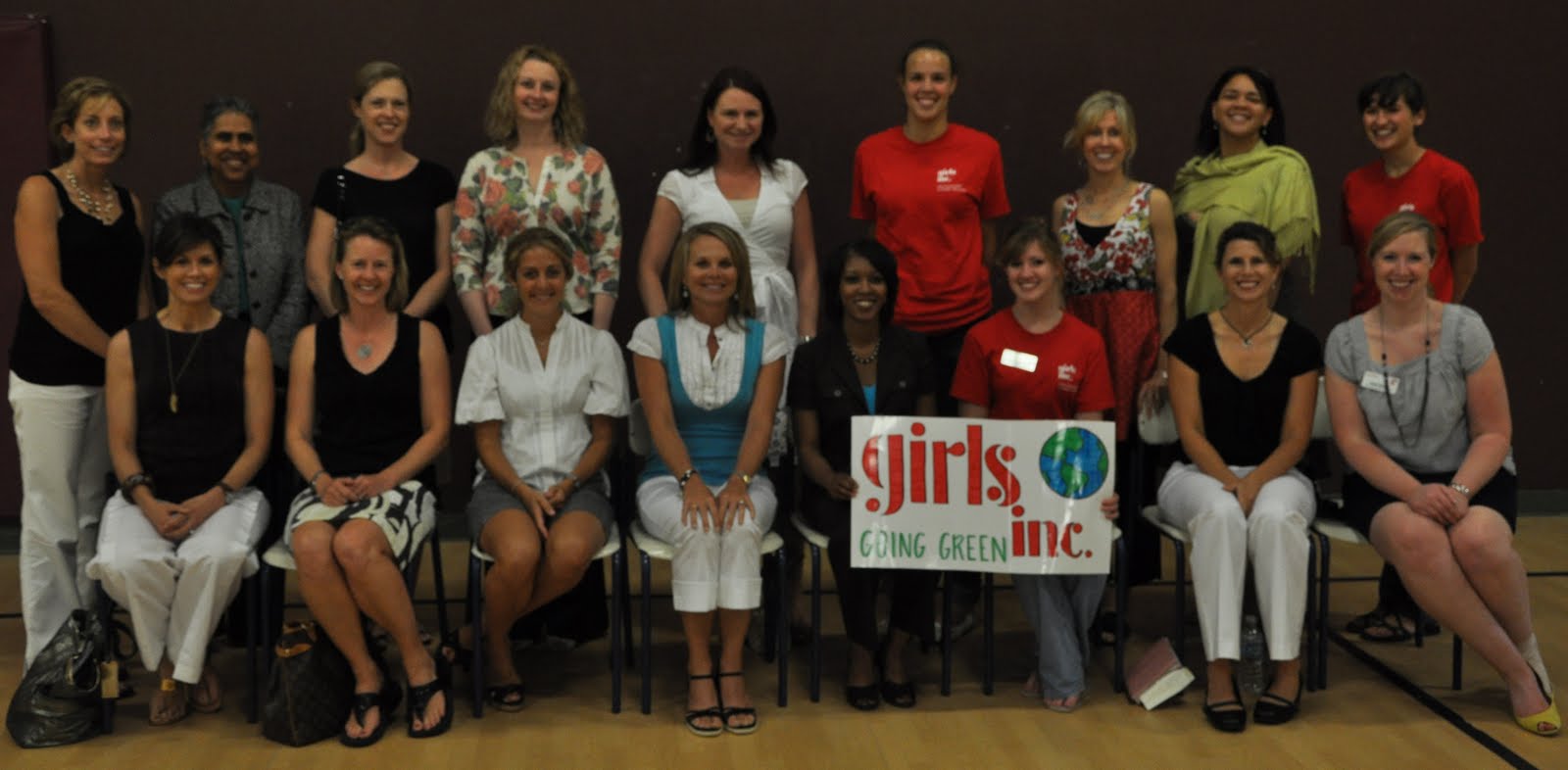
At the OPTIONS Class 10 site visit this week, it was truly my pleasure to spend time with young ladies participating in Girls Inc. of Greater Indianapolis' summer camp. Having the opportunity to see the young ladies use deductive and problem solving skills, was refreshing. (Most youth I see remind me that common sense is not so common!) I think I learned more about pollution yesterday (point and non-point) than I remember from high school. (And that’s not just because I graduated 14 years ago!)

Through well-conceived curriculum, I think that Pat Wachtel, executive director, and her staff are doing an excellent job of empowering girls to become successful women. Because of my work with National Office, I can attest to the awesome work Girls Inc. does in young women’s lives worldwide. After my visit to the local Girls Inc. camp, I realize that everyday they are teaching young ladies to become the BOLD, SMART, and STRONG women that will be one day be recognized during March.

If you have not visited with the ladies of Girls Inc., please plan to go and be impressed!

Tuesday, June 15, 2010

Education is Key to Violence Prevention

I was taken aback when reading the New York Times column posted on the Women's Fund Facebook page last week. The article highlighted a group of 14- and 15-year-old boys' "draft" of girls in their Maryland community. I won't go into the details, but you can read the column by clicking here. What may be viewed by some as innocent adolescent behavior may also foreshadow long-term issues with respect for women, which can lead to dating violence and domestic abuse. Objectifying women and girls diminishes a girl or woman's self-confidence and self-worth. It can have lasting impact on how she views relationships, and lead the offender (in this case, boys), to believe it is acceptable to treat others in this way.

The Indianapolis Star recently featured a program conducted at Westlane Middle School in Washington Township. Start Strong: Building Healthy Teen Relationships Initiative was implemented in all seventh-grade health classes last year, and will be spread to two more middle schools next year. A nationwide initiative, Start Strong is targeted to 11- to 14-year-olds, promoting healthy relationships as a way to prevent teen dating violence and abuse. The program is not only targeted to the students, but also engages educators, parents and caregivers, and policymakers. Start Strong Indianapolis reports:
  • 11.6% of Indiana high school youth reported being hit, slapped, or physically hurt by their boyfriend/girlfriend.
  • As many as 13.2% of females and 5.3% of males reported being physically forced into sexual intercourse.

These numbers are too high. Start Strong Indianapolis is partnering with Clarian Health to reach 4,000 students through engaging curriculum co-taught by peer advocates; to team with parents, healthcare providers, caregivers, coaches, and other youth serving organizations; and, to work with the Department of Education to enhance current policies through Indiana schools to address sexual harassment, bullying and violence.

Women's Fund is proud to be part of the solution, helping prevent domestic violence before it starts. Women's Fund has supported the Ruth Lilly Health Education Center's Healthy Relationships program for all 5th and 7th grade IPS students over three years. We are glad other groups are partnering together to champion and make violence prevention efforts a priority. These dedicated efforts will have long-term impact on the students involved and on the health and well-being of our community.

If you mentor a young person, I encourage you to keep communication lines open and make an effort to model and encourage healthy relationship behavior.

Thursday, June 10, 2010

Community Centers and How They Care for Their Communities

As an OPTIONS alumnae, and a donor to Women’s Fund, I’m committed to learning more about where my dollars are going – and sharing with readers what I learn. This time, I decided to explore the community centers that Women’s Fund has funded, including Concord, Hawthorne and John H. Boner Community Centers. Each has received operational support from Women’s Fund so I was interested in learning what the centers do for their communities.

I had an interesting and enlightening conversation with Niki Girls, executive director, Concord Neighborhood Center. While I toured the Center through OPTIONS, it’s been awhile, so it was nice to reconnect with Niki. The topic of our discussion … the challenges in our neighborhoods and the role community centers play.
After 28 years at the helm, Niki has seen a lot in her community (Concord serves Indy’s south side). She has helped a lot of people and has made an incredible impact in the lives of south side children and families. One thing I quickly realized in our conversation is that a lot of people, including me, don’t know and understand the comprehensive services community centers provide. As Niki put it, “we’re here if you’re three or 93. It’s the nature of who we are.”

The challenges her families face today are probably no different than others in Central Indiana:

  • Unemployment continues to be prevalent, challenging families who are searching for summer programs and activities for their children. Concord helps by lowering fees and subsidizing programs.

  • Families are stretched financially during the summer with children at home, often times causing an increase in food, water and electrical bills. Concord helps with financial assistance.

  • Working parents are looking for summer camps, programs and activities for their children. Although operating at capacity for day camp, Concord looks to ways to take care of as many kids as possible. They also have added teen programs two nights a week to give older kids in the neighborhood something to do (and to keep them out of trouble).

Niki credits Women’s Fund as one being instrumental in allowing them to continue serving families and individuals in their communities through their grant dollars. And after talking with Niki – and getting a sense of how passionate she is about her Center and “her families”, I felt proud that my contribution is supporting her in the work she does.

Tuesday, June 8, 2010

Caregiving... What I didn't know

I had not thought intentionally about the topic of caregiving prior to joining the Women's Fund team. Although there are many children in my extended family, I do not have children of my own, and my older family members were generally in good health. In short, I did not have to think about it. With grandparents facing health challenges, peers with young children, and regular exposure to the topic through Women's Fund, the issue of caregiving permeates my thoughts more regularly now.

Caregiving is more than an issue Women's Fund focuses on, it is an issue impacting all of us in one way or another. Many of us are responsible for the care of children, or are faced with elder care issues. The related statistics are striking. Following are some facts about caregiving, which we have uncovered in our research publication, Still on Shaky Ground 2006:
  • In central Indiana, there are only 24 licensed childcare spots for every 100 children under the age of six whose caregivers work outside the home.
  • In the Indianapolis metropolitan area, an estimated 63% of children under six have all parents in the labor force, while an estimated 71% of children 6-17 years old have all parents in the labor force.
  • 59,000 Indiana grandparents are raising their grandchildren; up 10,000 from 2006.
  • 20% of households where grandparents raise grandchildren live in poverty.

Caregiving issues affect all socioeconomic strata, yet they disproportionately impact the impoverished. Fortunately, there are organizations in our community addressing issues faced by caregivers. In addition to Women's Fund's support of many organizations, The Indianapolis Retirement Fund, a special interest fund of CICF, provides funding focused on helping community members as they age, for example.

We have highlighted many of the organizations we have supported on our blog. And, we will continue to do so, as they have an important role and impact the well-being of our families and our community. If you have any resources you have found particularly helpful, we welcome you to share them with us and our blog readers.

Thursday, June 3, 2010

Use What You've Got Prison Ministry Keeps Families Connected

Imagine you are a parent, miles away from your children and family members with no way to see them unless someone brings them to you. This is a reality for many in the justice system; the impact of this separation can be devastating to a family and, in particular, to developing bonds between parents and children.

Use What You've Got Prison Ministry's mission is to provide transportation for prison visitation while promoting family wellness through education, supportive resources, and spiritual enhancement. They drove a total of 24,586 miles last year, shuttling family members to sixteen correctional facilities spread throughout the state. A $5,000 grant from Women's Fund supported children visiting their mothers, helping the organization drive more miles last year, transporting them from places in Indiana such as Evansville, Gary, Goshen, Paoli, and Wabash. In 2009, Use What You've Got Prison Ministry transported 642 adults, most of which were women, and 167 children; in addition, they took 2,832 calls, up from 1,505 calls in 2008. 95% of their riders are female, 30% are unemployed, 82% have children, and nearly 60% have children living at home.

The transportation program is clearly a vital component of Use What You've Got Prison Ministry. The organization also offers other important services such as education, family advocacy, outreach, and support groups. Last year, they hosted a women's retreat, a parenting and life skills class, survival skills course, and health fair - "Keep Your Life in Sync." Outreach programs include donating clothing to needy families within their programs, assisting families with Christmas gifts to 150 children involved in their programs, and providing holiday food baskets to families. They also facilitate several support groups, such as a girlfriend support group (including a workshop on depression) and a "Girls Beyond Beauty" support group for young girls.

Families separated by incarceration and with limited options can find great support and consolation from Use What You've Got Prison Ministry. As someone who values spending time with my family members, I appreciate the great work of this organization and Women's Fund's support.

Tuesday, June 1, 2010

Hawthorne Community Center is the heart of its neighborhood

By Julie Rowlas
Community Volunteer

A few days ago I shared the experience of visiting Hawthorne Community Center with some friends and new acquaintances I’ve met through my volunteer activities with Women’s Fund. It was a beautiful day and the center was bustling with activity as it was assuming its role to be the neighborhood children’s cornerstone for the summer.

After having served on the grants committee for three years and been a member of the Women’s Fund family for nine, one would think and expect I had some educated and preconceived notions about this particular community center. This is true. I did. And many were exemplified as Diane Arnold, the center’s Executive Director (pictured right), spoke with our group and guided us through the center. However, there was one important role, which the center assumed in a much larger capacity than I had previously understood. This surprised me and compelled me to think a little differently about the lives of the families who utilize the center and its programs.

As a second generation Greek American I have heard the stories of my father not learning English until he went to school and the tight knit ethnic neighborhood where they lived in Chicago. They were nice stories to hear over the years, but the reality of them came to life as I heard Spanish in the halls and learned about Hawthorne Community Center’s significant role in melding the Appalachian community, which had lived in the area for more than 100 years, with the newer immigrant population of the Hispanic community. Language was a barrier whose walls have been broken in the center—and they have been done so with care from the staff and compassion from those who use the facilities and participate in the programs—with Diane leading the charge.

During the visit I was pleased to learn how Women’s Fund has played a significant role in this effort by funding programs developed to assist in bringing down these language and cultural barriers while educating the women about domestic violence. The need was identified, as domestic violence is greater in the Hispanic community than others. The barriers were also identified, as they didn’t know how to engage the community members who may be assisted by the program. I was impressed to learn how Diane and her staff entrench themselves so deeply in their community that they cleverly designed the "Piñata Making Class"—a craft program with the core purpose to educate women in the community about domestic violence. The conversations, the substance of the program, all happen while making piñatas.

It all came together for me as I watched Diane interacting with the children, using a little Spanish with her English, introducing us to community members and staff as we walked through the buildings, and encouraging each member of the community to be the best person they can be. At that moment it seemed as if I were visiting Jane Addams’ Hull House—it was just a different time, a different place, a different woman living in her community and making a difference.

Thursday, May 27, 2010

Redefining Beauty - Outcomes Beyond Measure

Tuesday I shared about the "Redefining Beauty" Girls Inc. program, which I recently facilitated at a local elementary school. The girls participating in the program came from diverse socioeconomic backgrounds. I could not say that conflict did not happen (after all, I was working with 9 to 11 year-old girls)! However, the positive outcomes of the program were phenomenal.

My co-facilitator and I made great progress with the girls. With the support of Girls Inc. and school staff, we built trust, and saw girls open up around the activities and topics. We challenged their understanding of beauty, and took advantage of many teachable moments.


The last session, the girls were charged with performing one to two minute commercials about themselves, sharing "What makes me beautiful?", "What makes me unique?" and other things they wanted to tell their peers. The girls had the previous session to plan, write and practice their commercials. I was so impressed with how focused the girls were during this exercise. They took the challenge seriously, and they really wanted to share about themselves to peers and trusted adults!


Some of my favorite moments from the program were:
  • One girl came to us defensive and highly confrontational. When presenting her commercial, she acknowledged that people do not get to know her, and she suggested this might be different if she changed her tone of voice and behavior. This was great progress! She acknowledged a challenge she faced, the girls saw her own up to it, and the group validated her for sharing her feelings and reinforced the beautiful and unique person she is.
  • Another girl was considerate and shy. When it came to writing her commercial, she shared about a (non-contagious) disease she had. While in some settings, she might have wanted to hide it, in Girls Inc. we had an accepting environment where she felt comfortable owning her disease and sharing about it with her peers.
  • During one session, we had a discussion about how to respond to someone who criticizes outward appearances. The girls had wonderful, thoughtful ideas, such as: "Say something nice about her in return." "Ignore the comment." "Think about something you do well (inner beauty) and share why you are proud of it."
As you can see, the girls were truly remarkable, and the "Redefining Beauty" curriculum helped affirm their self-confidence and enabled them to validate real beauty in themselves and others. I am so glad I have the opportunity to be a role model for girls, and that Women's Fund supports gender-specific programming like "Redefining Beauty" for girls.